Kacip Fatimah Extract Astilbin CAS 29838-67-3 | Plant Extract – Baisfu
What the extract is
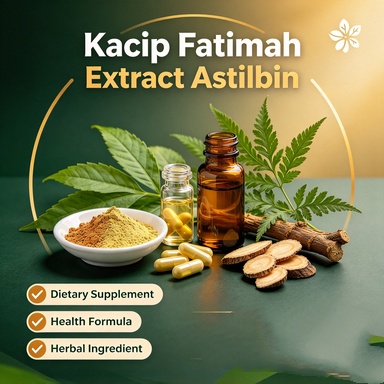
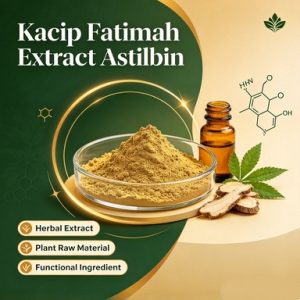
Kacip Fatimah Extract is a standardised botanical extract prepared from the dried leaves of Labisia pumila (Bl.) Fernald var. alata, a perennial herb of the Primulaceae family native to the rainforest understory of Malaysia and Indonesia. The extract is characterised by its astilbin content, a flavanonol glycoside whose antioxidant and anti-inflammatory profile has attracted sustained research interest; the material is supplied here in nutraceutical and cosmetic grades for women’s wellness formulations.
Botanical source and harvest
Labisia pumila is wild-harvested or shade-cultivated in Malaysia; the leaves are harvested year-round from mature plants, cleaned, dried and extracted. Baisifu sources from established Malaysian supply channels and the Statement of Origin identifies the harvest region and the wild or cultivated source.
Active marker and standardisation
Baisifu standardises the extract in-house by HPLC against an astilbin reference standard (CAS 29838-67-3); the standard assay grade is 5 percent astilbin, with total flavonoids flagged as the secondary marker. The full HPLC fingerprint, including related flavanonols, is recorded on each COA so formulators can verify the botanical identity and the lot-to-lot consistency.
Physical and sensory behaviour
The extract is a brownish-green to brown fine powder with a faint, mild, herbaceous odour; the material is soluble in water and ethanol at typical use levels and disperses in propylene glycol. The powder is hygroscopic and should be stored sealed with desiccant.
Typical applications
Kacip Fatimah Extract enters the following formulation workflows:
- nutraceutical and dietary supplement capsules (women’s wellness)
- cosmetic botanical actives
- functional-food and beverage systems
- traditional botanical formulations
- antioxidant formulations
- research and development
Formulation notes
The extract is soluble in water and ethanol and disperses in propylene glycol at typical use levels. The astilbin content is sensitive to heat and oxidation, so low-temperature processing and air-protected storage are advised. The powder is hygroscopic and should be stored sealed with desiccant; flavour masking may be required in beverage systems.
COA and batch documentation
Each drum ships with a Certificate of Analysis carrying the HPLC fingerprint, astilbin assay, total flavonoid flag, loss on drying, bulk density, heavy metals (Pb, As, Cd, Hg), pesticide residue screen and microbial count. An allergen declaration, a Statement of Origin and a non-GMO declaration complete the pack.
Regulatory and compliance
Labisia pumila is a traditional botanical of Malaysian practice; the regulatory status varies by market, with some jurisdictions classifying the extract as a novel food or traditional medicine rather than a freely marketable supplement. Buyers should confirm the regulatory status in their target market before committing. Under EU CLP the concentrated powder is not classified as hazardous, but standard Hazmat assessment should be performed for bulk movement.
Packaging, storage and supply
Kacip Fatimah Extract is filled into 25 kg fibreboard drums with an inner double polyethylene liner and a desiccant sachet, sealed under COA. Store in a cool, dry, dark place; the recommended storage temperature is below 25 degrees Celsius with a shelf life of 24 months from manufacture in original sealed packaging. Baisifu ships ex-Xi’an, MOQ 1 kg for sample development and 25 kg and above for production orders; standard lead time 10 to 15 days.
Questions buyers ask
What astilbin level can you guarantee?
The standardised grade is assayed by HPLC to 5 percent astilbin against a reference standard; the exact figure and the full secondary fingerprint are printed on the COA of every drum.
Is the raw material wild-harvested or cultivated?
Baisifu supplies both wild-harvested and shade-cultivated Labisia pumila; the Statement of Origin identifies the source type and the harvest region.
Can you supply a higher astilbin grade?
The standardised grade is 5 percent astilbin; if a 10 or 20 percent grade is required, state the target and we will advise availability before you commit.
Request a quotation
Send Baisfu the required astilbin grade and quantity, and the sales desk will reply with a current price, the lot HPLC fingerprint, packing option and lead time, with pre-shipment samples from the quoted lot.
Need specifications, COA, or a wholesale quote? Contact Us — typical response within 24 hours.