Ginsenosides CAS 90042-90-3 | Panax Ginseng Extract – Baisfu
What the extract is
Ginsenosides (CAS 90042-90-3) are the total triterpenoid saponin fraction of Panax ginseng C.A. Meyer root, the adaptogenic botanical of Chinese and Korean tradition. The fraction contains more than 30 individual ginsenosides, including Rb1, Rb2, Rc, Rd, Re, Rf, Rg1, Rg2 and Rg3; the profile and the ratio of protopanaxadiol-type (Rb1, Rd) to protopanaxatriol-type (Re, Rg1) ginsenosides define the pharmacopoeial identity and the chemotype of the raw material.
Botanical source and harvest
Panax ginseng is cultivated in Jilin, Liaoning and Heilongjiang; the roots are harvested at 4 to 6 years of age, cleaned, dried and graded before extraction. Baisifu sources from established growing regions and the Statement of Origin identifies the harvest region, the root age and the drying method (white or red ginseng) so buyers can trace the raw material back to the field.
Active marker and standardisation
Baisifu standardises the extract in-house by UV spectrophotometry and HPLC against reference markers; the standard assay grades are 5 percent, 10 percent, 20 percent and 80 percent total ginsenosides (UV), with the individual Rb1, Rg1 and Re levels printed on each COA. The full HPLC fingerprint is recorded so formulators can verify the chemotype and detect any drift from the historical control profile.
Physical and sensory behaviour
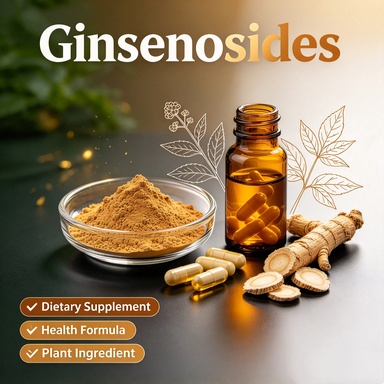
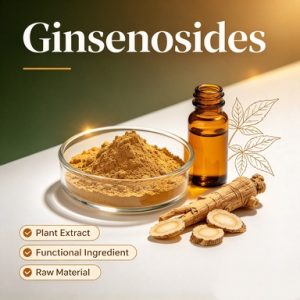
The extract is a pale-yellow to brown fine powder with a characteristic mild, slightly bitter, ginseng-like odour; the material is soluble in water and ethanol at typical use levels and disperses in propylene glycol. The 80 percent grade is a lighter, more bitter powder. The material is hygroscopic and should be stored sealed with desiccant.
Typical applications
Ginsenosides enter the following formulation workflows:
- nutraceutical and dietary supplement capsules
- adaptogenic and anti-fatigue formulations
- functional-food and beverage systems
- traditional botanical formulations
- cosmetic botanical actives
- research and development
Formulation notes
The extract is soluble in water and ethanol and disperses in propylene glycol at typical use levels. The ginsenoside profile is sensitive to heat and pH, so low-temperature processing and neutral pH are advised to preserve the Rb1 and Rg1 levels. The material is hygroscopic and should be stored sealed with desiccant; the 80 percent grade is particularly moisture-sensitive.
COA and batch documentation
Each drum ships with a Certificate of Analysis carrying the HPLC fingerprint, total ginsenosoid assay, Rb1/Rg1/Re split, loss on drying, bulk density, heavy metals (Pb, As, Cd, Hg), pesticide residue screen and microbial count. An allergen declaration, a Statement of Origin and a non-GMO declaration complete the pack.
Regulatory and compliance
Panax ginseng root is recognised in Chinese pharmacopoeial monographs and is permitted as a dietary supplement ingredient in most jurisdictions. The regulatory status for adaptogenic claims varies by market. Under EU CLP the concentrated powder is not classified as hazardous, but standard Hazmat assessment should be performed for bulk movement.
Packaging, storage and supply
Ginsenosides extract is filled into 25 kg fibreboard drums with an inner double polyethylene liner and a desiccant sachet, sealed under COA. Store in a cool, dry, dark place; the recommended storage temperature is below 25 degrees Celsius with a shelf life of 24 months from manufacture in original sealed packaging. Baisifu ships ex-Xi’an, MOQ 1 kg for sample development and 25 kg and above for production orders; standard lead time 10 to 15 days.
Questions buyers ask
What ginsenoside level can you guarantee?
The standardised grades are assayed to 5 percent, 10 percent, 20 percent and 80 percent total ginsenosides (UV); the individual Rb1, Rg1 and Re levels are printed on the HPLC fingerprint on the COA of every drum.
Is this white or red ginseng source?
Baisifu supplies both white and red ginseng sources; the Statement of Origin identifies the drying method. White ginseng carries a higher Rg1 profile; red ginseng carries a higher Rg3 and compound-K precursor profile. State the target and we will confirm availability.
Can you supply an Rg3-enriched grade?
The standardised grade is total ginsenosides; if an Rg3-enriched or a specific single-ginsenoside grade is required, state the target marker and assay and we will advise availability before you commit.
Request a quotation
Send Baisfu the required ginsenoside grade and quantity, and the sales desk will reply with a current price, the lot HPLC fingerprint, packing option and lead time, with pre-shipment samples from the quoted lot.
Need specifications, COA, or a wholesale quote? Contact Us — typical response within 24 hours.