
Cranberry Extract CAS 90045-47-9 | Fruit Extract – Baisfu
What the extract is
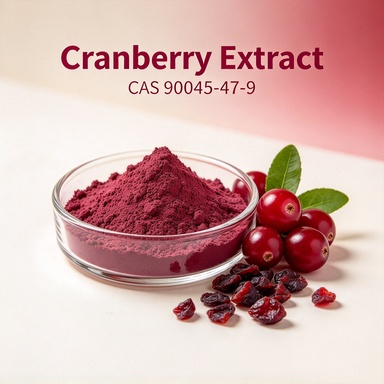
Cranberry Extract (CAS 90045-47-9) is a standardised botanical extract prepared from the fresh or dried fruits of Vaccinium macrocarpon Aiton, Ericaceae, a perennial vine cultivated across northeastern North America and imported-lot supply chains. The extract is characterised by its proanthocyanidin (PAC) fraction, principally A-type linkages (double bonds), together with organic acids and anthocyanins; the researched profile supports urinary-tract and anti-adhesion formulations.
Botanical source and harvest
Vaccinium macrocarpon is cultivated in North America (Wisconsin, Massachusetts, New Jersey) and in imported-lot supply chains; the fruits are harvested at full ripeness in early autumn, cleaned, sorted and quick-frozen or dried before extraction. Baisifu sources from established growing regions and the Statement of Origin identifies the harvest region and the cultivated source so buyers can trace the raw material.
Active marker and standardisation
Baisifu standardises the extract in-house by HPLC and by the BL-DMAC method against reference markers; the standard assay grade is 3.0 percent proanthocyanidins (BL-DMAC, as A-type PAC equivalent), with anthocyanins flagged as the secondary marker. The full PAC fingerprint is recorded on each COA so formulators can verify the identity and the lot-to-lot consistency.
Physical and sensory behaviour
The extract is a deep-pink to dark-red fine powder with a characteristic, tart, fruity odour; the material is soluble in water and ethanol at typical use levels and disperses in propylene glycol. The natural colour is pH-dependent (red in acidic media, bluish in neutral media); the powder is hygroscopic and should be stored sealed, protected from light.
Typical applications
Cranberry Extract enters the following formulation workflows:
- nutraceutical and dietary supplement capsules (urinary-tract support)
- anti-adhesion and women-wellness functional formulations
- functional-food and beverage systems (low-dose grades)
- cosmetic skin-care actives (research-grade botanical)
- oral-care and dental research prototypes
Formulation notes
The A-type proanthocyanidin linkage is the distinguishing quality marker of cranberry and is responsible for the researched anti-adhesion profile; B-type PACs (from grape seed or other sources) do not have the same profile. In capsule grades the extract is blended with maltodextrin to a target PAC assay. The natural colour is pH-dependent and may shift in finished formulations; evaluate the colour against the finished product presentation.
Certificate of Analysis
Each lot ships with a COA recording:
- proanthocyanidins assay by BL-DMAC (as A-type PAC equivalent)
- anthocyanin secondary-marker profile
- organic acid (quinic, malic, citric) fingerprint
- loss on drying and residue on ignition
- heavy metals (Pb, As, Cd, Hg)
- microbial count and specified pathogens
Regulatory and handling
Cranberry Extract is supplied as a botanical raw material for nutraceutical, functional-food and cosmetic formulation. It is not a drug and makes no drug-level claim. Buyers are responsible for confirming the regulatory status of the finished formulation in the target market. Handle as a fine powder with gloves and eye protection; the natural colour may stain.
Packaging and storage
Supplied in double-sealed food-grade polyethylene bags within fibreboard drums, 1 kg, 5 kg and 25 kg net. Store in the original sealed container at room temperature, dry, protected from light; the retest date is 24 months from manufacture when stored as recommended.
Questions
What makes cranberry PAC different from grape seed PAC?
Cranberry contains A-type proanthocyanidins (with a double-bond linkage between monomer units), while grape seed contains B-type PACs (with a single-bond linkage). The A-type linkage is responsible for the researched anti-adhesion profile of cranberry.
Why is the powder red?
The natural anthocyanin content gives the powder its red colour. The colour is pH-dependent: red in acidic media, bluish in neutral media. The colour shift is characteristic and not indicative of degradation.
Can it be used in food?
The extract is supplied as a raw material; the regulatory status for food use varies by market. Confirm the permitted use level and any required notification with the target-market regulator before formulating.
Request a quotation
Send Baisfu the required proanthocyanidin standard and quantity, and the sales desk will reply with a current price, the lot fingerprint, packing option and lead time, with pre-shipment samples from the quoted lot.
Need specifications, COA, or a wholesale quote? Contact Us — typical response within 24 hours.