
Coenzyme Q10 CAS 303-98-0 | 98% Fermentation Ubiquinone – Baisfu
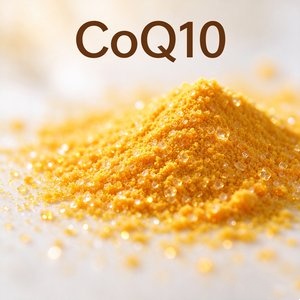
What the compound is
Coenzyme Q10 (ubiquinone, ubidecarenone, CAS 303-98-0) is a fat-soluble benzoquinone that functions as an electron carrier in the mitochondrial respiratory chain and as a lipid-phase antioxidant. The commercial standard is trans-ubiquinone at 98 percent assay, and Baisifu supplies it as a fermentation-derived raw material for cardiovascular-support research, antioxidant and healthy-ageing formulations — the position where it most often sits beside resveratrol and astaxanthin in a women’s healthy-ageing capsule.
Production and origin
Baisifu CoQ10 is produced by microbial fermentation using a Yarrowia-type yeast strain in a controlled bioreactor, then extracted, purified by chromatography and crystallised. It is not a plant extract and not a synthetic chemically assembled molecule; the fermentation route gives the trans configuration that the human body actually uses. The Statement of Origin records the fermentation batch and the manufacturing site, so buyers filing in regulated markets can document the source without chasing a trader.
Identity and assay
The material is standardised by HPLC against a ubiquinone reference standard at 275 nm. The standard grade is 98.0–101.0 percent on the dried basis, with the ubiquinol (reduced) form reported where a buyer requests it. Related substances, the cis-isomer and residual fermentation solvents are part of the release specification, not an afterthought, because the cis-isomer has no biological activity and a high cis content is the usual signature of a poorly purified lot.
Physical behaviour
Coenzyme Q10 is a yellow to orange-yellow crystalline powder with almost no odour. It is practically insoluble in water, sparingly soluble in ethanol and freely soluble in oils and fats, and it melts in the 48–52 degree Celsius range, which matters in softgel and hot-melt processing. The material is light-sensitive and slowly oxidises on prolonged air exposure; keep it sealed, cool and protected from light, and avoid holding molten material at temperature for longer than the process requires.
Applications
Coenzyme Q10 enters the following formulation workflows:
- softgel and two-piece capsule supplements (healthy-ageing and antioxidant positioning)
- cardiovascular-support and mitochondrial-energy research formulations
- women’s healthy-ageing stacks with resveratrol, astaxanthin and vitamin E
- cosmetic antioxidant actives for serums and emulsions
- functional-food and beverage prototypes (water-dispersible grade)
Formulation notes
Because CoQ10 is crystalline and lipophilic, its oral bioavailability depends almost entirely on the delivery system: dissolve it in a lipid carrier, micronise it, or use a self-emulsifying system, and expect a large difference in absorption between a dry blend and an oil suspension. In softgels, hold the fill mass below 45 degrees Celsius and add the CoQ10 last to limit heat exposure. For beverages use the water-dispersible grade and protect the finished product from light.
Certificate of Analysis
Each lot ships with a COA recording:
- CoQ10 assay by HPLC (dry basis)
- related substances and cis-isomer content
- identification by HPLC retention time and UV spectrum
- loss on drying, ash and heavy metals (Pb, As, Cd, Hg)
- residual solvents and microbial count with specified pathogens
- melting range and sieve analysis
Regulatory and handling
Coenzyme Q10 is supplied as a raw material for nutraceutical, functional-food and cosmetic formulation. It is not a drug and makes no drug-level claim. Buyers are responsible for confirming the regulatory status of the finished formulation in the target market. Handle as a fine powder with gloves and eye protection, and keep the workplace free of ignition sources during micronising.
Packaging and storage
Supplied in double-sealed food-grade polyethylene bags within fibreboard drums, 1 kg, 5 kg and 25 kg net. Store in the original sealed container at room temperature, dry, protected from light; the retest date is 24 months from manufacture when stored as recommended.
Questions
Is your CoQ10 oxidised or reduced form?
The standard grade is ubiquinone, the oxidised form. Ubiquinol (the reduced form) is available on request for buyers who need it, and the COA will state which form is supplied.
Why does the cis-isomer matter?
Only the trans configuration is biologically active. A high cis content indicates incomplete purification, so the isomer ratio is released on the COA rather than assumed.
Can it be used in a water-based beverage?
Standard crystalline CoQ10 is not water-soluble. Use the water-dispersible grade, which is formulated for beverage and sachet systems, and confirm the dispersion stability in your own matrix.
Request a quotation
Send Baisfu the required assay grade, delivery format and quantity, and the sales desk will reply with a current price, the lot fingerprint, packing option and lead time, with pre-shipment samples from the quoted lot.
Need specifications, COA, or a wholesale quote? Contact Us — typical response within 24 hours.